Timing Belt
A small belt you really don't want to gamble on.
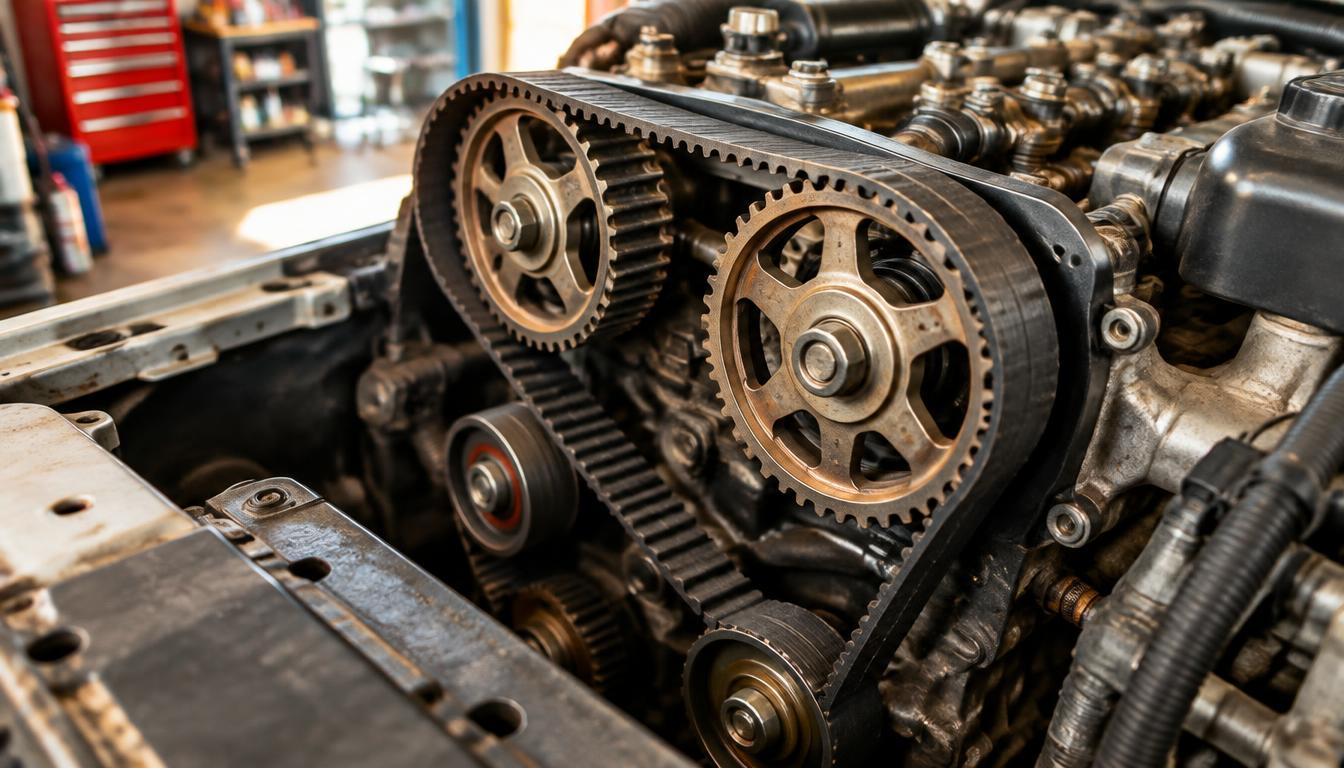
The timing belt keeps the top and bottom halves of your engine in sync — valves open and close at exactly the right moment. If it snaps, that timing is gone, and the damage is immediate and expensive.
It's a maintenance item on a schedule, not a fix-it-when-it-fails part. Replacing it on time costs a fraction of what the engine damage costs after.
What we take care of
- Timing belt replacement
- Water pump replacement (while it's accessible)
- Timing belt pulley and tensioner service
- Camshaft and crankshaft seal inspection
You might also need
Common questions
What happens if my timing belt breaks?
On many engines, the pistons and valves collide — turning a maintenance item into a major engine repair. On others you're just stranded. Either way, it's a part you replace on a schedule, not when it fails. If you don't know when yours was last done, that's your answer.
How do I know when my timing belt is due?
Check your owner's manual — most are due somewhere between 60,000 and 100,000 miles. There's usually no warning before one goes, which is the whole point of the schedule. Tell us your car and mileage and we'll tell you where you stand.
Does the desert heat affect timing belts?
Yes — heat ages rubber, and timing belts are rubber. A belt living under a Vegas hood is aging faster than the same belt in Seattle. If you're near the interval, don't stretch it.
Think it's time? Let's take a look.
Honest answers, clear pricing, your call — same as Dad did it.